.png)
Electric vs Petrol Outboards for Your RIB Tender: Which Option Works Best?
TL;DR: At a Glance
Electric Outboards: Deliver instant torque, whisper-quiet running, zero direct emissions, and low maintenance—making them ideal for short tender transfers and eco-sensitive waterways.
Petrol Outboards: Provide longer range, higher top speeds, and rapid refuelling, making them the preferred choice for long-distance coastal exploration and heavy towing.
The Aluminium Advantage: GALA’s ultra-light powder-coated aluminium hulls offset heavy battery packs, maximising battery efficiency, range, and overall planing performance.
Patented Hull Efficiency: Features such as patented «GALA TABS» reduce transom drag, allowing electric propulsion setups to get on the plane easily with reduced power consumption.
An electric RIB tender is a lightweight rigid inflatable boat powered by a battery-driven outboard motor, offering zero-emission propulsion, silent operation, and lower maintenance costs compared to conventional petrol-powered tenders. When searching for the ideal rib tender for sale, boat owners often compare traditional petrol engines against modern electric propulsion systems to see which best matches their davit limits and daily cruising needs. At GALA Ribs UK, our new generation of aluminium-hull RIBs provides the structural foundation required to get maximum performance and efficiency from both fuel and electric power.
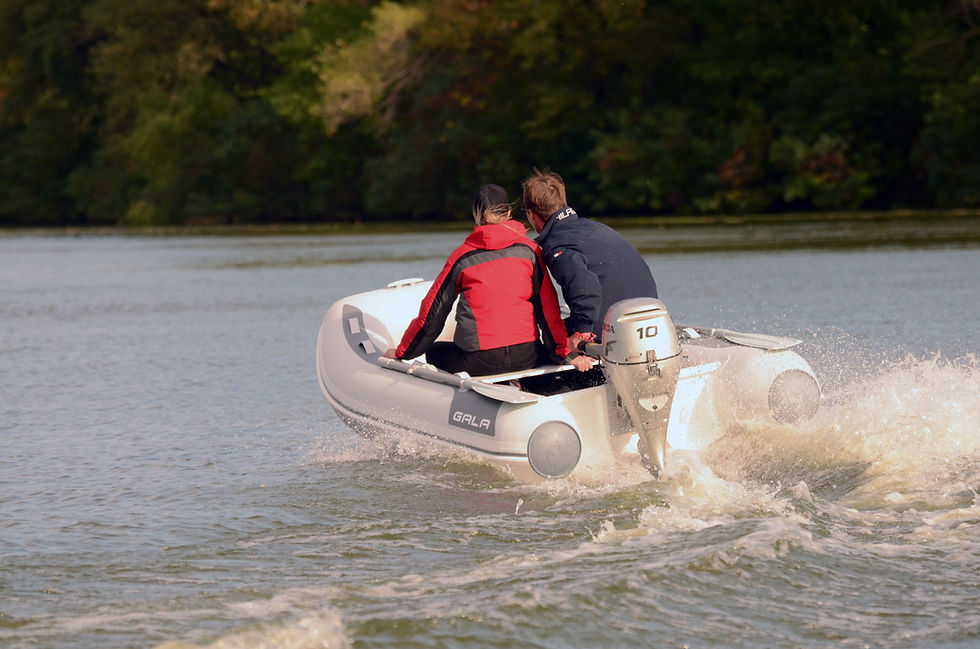
Can You Put an Electric Outboard on a RIB Tender?
Yes, you can easily fit an electric outboard to a RIB tender, provided the transom design and overall craft weight are properly balanced. Electric outboards—ranging from compact 1 kW tiller-steered units to powerful 12 kW+ helm-controlled engines—mount directly onto standard boat transoms without requiring special hull modifications. Because electric motors generate maximum torque instantly from zero RPM, they excel at popping tender hulls onto a plane quickly.
However, electric setups require careful consideration of battery mass. This is where GALA’s advanced hull engineering provides a distinct advantage. Models like our ATLANTIS Lite A270 weigh as little as 41 kg. This low hull weight is crucial when evaluating a modern rib tender for sale, as lower displacement directly offsets the weight of heavy marine lithium battery packs. Furthermore, GALA’s patented «GALA TABS» transom extensions extend the bottom surface of the hull, creating lift at the stern to prevent tail-heavy squatting under battery loads.
How Do Electric and Petrol Outboards Compare on Range and Weight?
Range & Refuelling: Petrol engines remain the benchmark for extended coastal journeys. A quick visit to a marina fuel pontoon tops up a petrol tender like the VIKING V330 in minutes. Electric tenders excel at short-to-medium transfers (3 to 10 nautical miles per charge at cruising speed), making them ideal for yacht-to-shore dinghy runs or cruising quiet estuaries.
Weight Distribution: Petrol motors draw fuel from built-in bow lockers—such as those on the double-deck ATLANTIS A300D—which keeps weight forward for superior balance. Electric tenders store heavy batteries centrally or near the transom, making lightweight aluminium hulls essential for maintaining longitudinal stability.
Maintenance & Convenience: Electric motors eliminate spark plugs, impellers, fuel filters, and stale petrol issues, making winterisation fast and effortless. Petrol outboards require routine annual servicing but offer unlimited range as long as fuel is available.
FAQ: Key Questions About Electric RIB Tenders
How far can an electric RIB tender go on a single charge?
Most modern marine battery setups offer 1 to 2 hours of runtime at planing speeds (10–15 knots) or up to 5–8 hours at low displacement speeds (3–5 knots), easily covering typical yacht-to-shore journeys.
Are electric outboards heavier than petrol motors?
The outboard unit itself is often lighter than a petrol engine, but the lithium battery pack adds overall weight. Pairing an electric motor with an ultra-light tender like the GALA ATLANTIS A240 or A300 ensures your total vessel weight stays within safe davit lifting limits.
How do you charge an electric tender on a yacht?
Electric tenders can be charged via standard shore power, onboard generator connections, or solar power banks while stowed safely on deck or in davits.
Whether you choose electric or petrol, finding the right rib tender for sale depends on your vessel's davit capacity and your daily cruising range. To learn more about GALA’s rib tender options and explore our complete range of ultra-lightweight aluminium hulls, visit the GALA ATLANTIS Lite collection.


